

Back to the Prolego reference library
Invest for compounding value: think big, start small
The first AI investment should create tangible value on its own and make the next investment faster and more valuable. That is the practical meaning of think big, start small: choose where to begin with the larger business transformation in view, then keep building on what works.
Business reinvention explains how we choose that starting point. Here, the question is what carries forward as the work expands.
Two foundations that let you keep adding more
Operations Intelligence carries the company's knowledge and reliability capabilities into each new application. Source connections, approved guidance, tools and evaluations become a foundation the next workflow can use and strengthen. The investment in understanding the business keeps contributing beyond the first task.
The AI Workbench lets new skills reach people without a new interface. Experts can use another capability through Claude or ChatGPT, connected to the same intelligence layer. The team can expand what people do without building and maintaining a separate front end each time.
Together, these make expansion practical. The architecture page explains the layers and how they support scale, velocity and leverage.
Speed compounds
In our experience, a first major workflow can take about six months to establish and refine the foundation, with first production use around month three. The next can take about three months, the next about one and a half, and later implementations roughly half as long again. Business value and organizational readiness set the order and pace.
The team keeps operating and improving everything already in use. Later workflows inherit working connections, knowledge, evaluations, infrastructure and experience of working together. Their implementation periods shrink as that foundation grows.
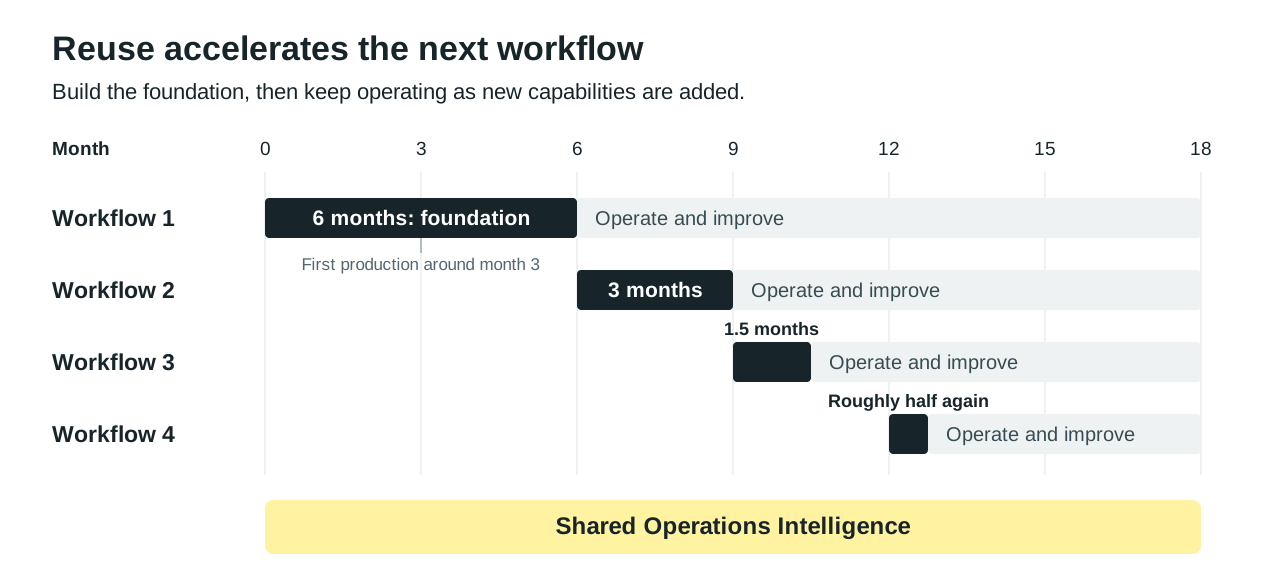
Shorter implementation periods build on shared Operations Intelligence while earlier workflows remain in operation.
Six months of foundation work does not mean waiting six months for a useful system. Production use and continued refinement overlap. What sets the pace of an AI project explains the organizational and reliability work behind a schedule.
Value expands while the team cost stays fixed
Under our fixed-team retainer, the same team keeps building, operating and improving as AI reaches more of the business. Each application adds to the value the team can support, using capabilities already developed for earlier work.
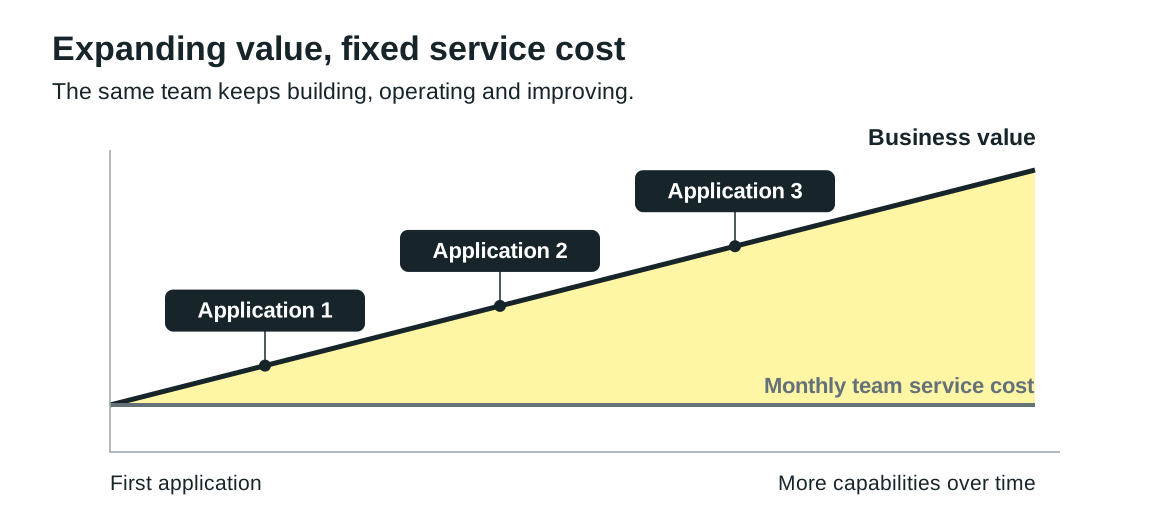
Business value grows as applications are added, while the monthly team service cost stays level.
The chart illustrates the operating model, without forecasting financial returns. The fixed cost here is the agreed monthly team fee. Model usage, infrastructure and other providers are separate. Working with Prolego explains the retainer, priorities and commercial terms.
Learning across clients accelerates the work
What we learn in one engagement immediately informs what we recommend in others. Our recent move from separate applications toward one AI Workbench with skills is an example: a better way to reach users becomes part of how we help other clients expand.
That learning keeps changing the architecture. Better models and tools let us simplify the supporting systems and spend more of the team's effort on the next business opportunity.
The personal-loans account in our delivery cases shows this progression in practice: production chat provided the foundation for Coach, whose core was built in two weeks, followed by sales preparation and Workbench capabilities. The full account explains the delivery status and what the client expected those capabilities to make possible.